
Restaurant Technology
Published March 6, 2026
Use QR, SMS and POS-integrated feedback to resolve issues instantly, improve service consistency, and boost ratings and revenue.

Real-time feedback systems are transforming how restaurants address customer concerns and improve service. These tools use methods like QR codes, SMS, and emails to collect guest opinions during or right after their visit. The benefits? Faster issue resolution, better service consistency, and actionable data for long-term improvements. Key points include:
For example, restaurants using real-time feedback systems have seen an 8% revenue boost for every 0.1-star improvement in online ratings. Tools like Bytes AI further enhance this process by integrating feedback with POS systems, offering centralized analytics, and automating phone interactions. These systems ensure no guest concern goes unnoticed, leading to happier customers and increased profits.
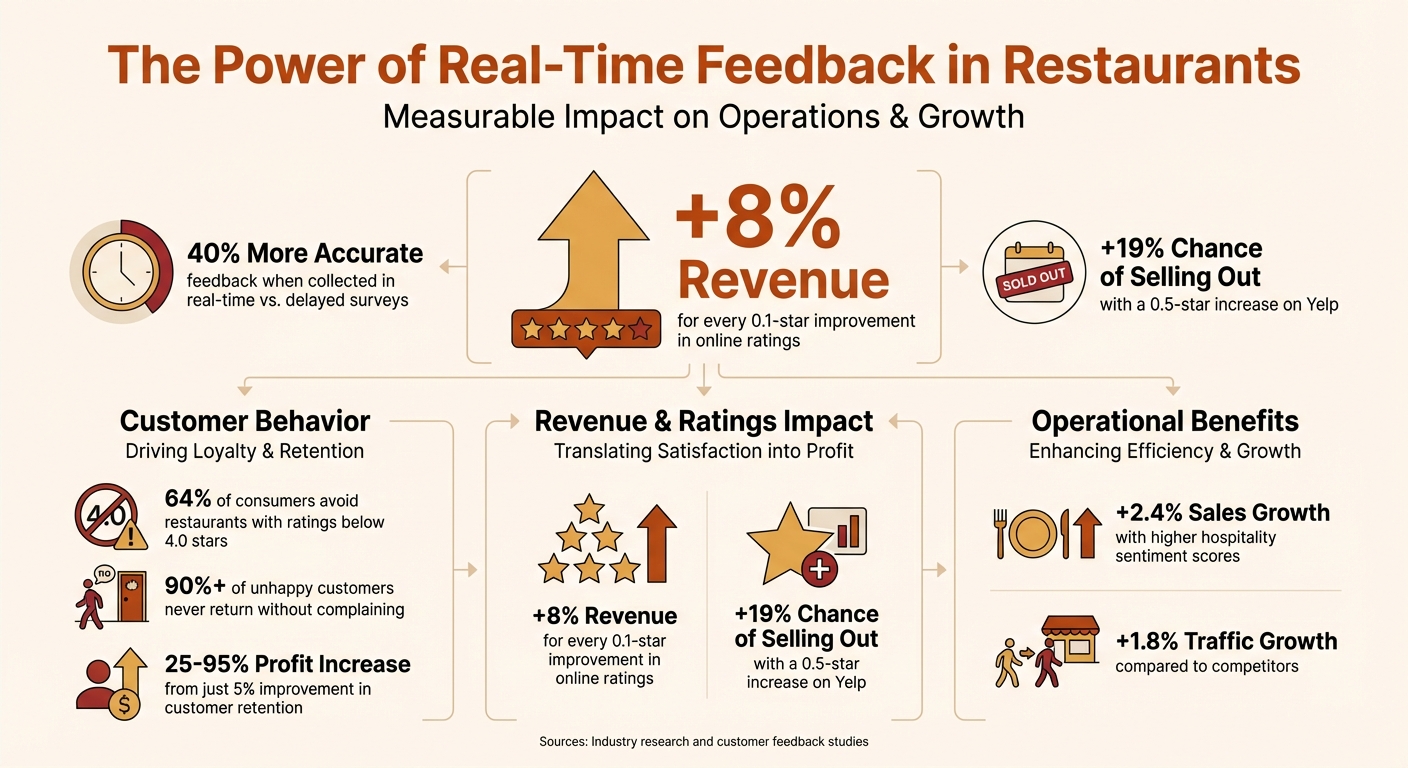
Real-Time Feedback Impact on Restaurant Revenue and Customer Retention
Traditional feedback methods, like post-visit surveys or email requests, often arrive long after a guest has left the restaurant. This delay makes it impossible to fix problems while the guest is still on-site. For instance, if a guest’s salmon is undercooked or their server is inattentive, those issues go unresolved because the feedback comes hours - or even days - later. The result? A missed opportunity to turn things around and leave a better impression.
Delayed feedback also tends to be less accurate. Studies show that guest responses collected in real time are up to 40% more precise than those gathered later. Details fade, and frustrations can amplify over time. As the Customer Echo Team aptly puts it:
"A complaint that sits unread for 48 hours is a complaint that becomes a one‐star Google review".
Without immediate feedback, restaurants often fail to identify and address service inconsistencies. For example, kitchen staff might not realize they’re running low on condiments or that dishes are leaving the pass undercooked until multiple guests are already affected. Jon Holowachuk, Director of Marketing at Benbria, explains:
"Plating inconsistencies, missing ingredients, and slow prep times are reported too late".
These lapses in consistency can erode customer trust, leading to fewer return visits. Data shows that restaurants with higher hospitality sentiment scores see a 2.4% boost in sales growth and a 1.8% increase in traffic growth compared to their competitors. However, traditional feedback often skews toward extreme experiences, meaning everyday service issues - like slow refills or lukewarm food - go unnoticed. Without real-time data to connect the dots, these recurring problems persist, gradually chipping away at overall service quality.
Perhaps the most damaging consequence of delayed feedback is the inability to make meaningful improvements. Feedback scattered across multiple platforms or delivered long after the fact makes it nearly impossible for managers to identify patterns. Without real-time systems that tie feedback to specific shifts, tables, or orders, recurring issues go unchecked.
The financial stakes are high. Research shows that increasing customer retention by just 5% can boost profits by 25% to 95%. Yet, many restaurants lose dissatisfied customers without ever realizing there was an issue. First-time guests are particularly at risk, as FeedbackAdmin points out:
"First-time guests don't always complain, but they always decide".
Real-time feedback systems solve this by consolidating data and allowing managers to act quickly, improving both guest satisfaction and long-term retention.
Real-time feedback systems are changing the game for restaurant management by capturing guest opinions instantly. Instead of relying on delayed surveys, these systems use tools like QR codes, text messages, or digital kiosks to gather feedback during or right after a meal. This immediate insight lets managers address concerns before they escalate into public complaints or lost business. Beyond fixing immediate problems, the data gathered also guides smarter long-term decisions.
One of the biggest perks of real-time feedback is the ability to fix issues on the spot. Modern systems can send low ratings - typically below 4 stars - straight to management via mobile alerts. For instance, if a diner reports cold food or slow service mid-meal through a text, the manager can step in within minutes to offer a replacement dish or speed up the order process. These systems are designed to keep 1–4 star ratings private for internal resolution, while showcasing 5-star reviews on public platforms. Some platforms even use automated workflows to detect keywords like "cold" or "slow" and trigger specific recovery actions, such as an apology or discount offer. Since most customers expect quick and personalized responses, these systems help improve service quality and create a continuous cycle of feedback and improvement.
Real-time feedback doesn’t just fix individual issues - it also uncovers patterns that drive broader operational improvements. Smart routing ensures feedback goes to the right department: bar-related comments to the bar manager, order accuracy issues to the kitchen, and cleanliness concerns to janitorial staff. AI-powered sentiment analysis identifies recurring problems, like frequent mentions of "slow check-in" or "cold fries" from a specific station, helping managers address root causes with better staffing or training. By consolidating all feedback into one dashboard, restaurants can quickly make adjustments - whether it’s restocking condiments, refining recipes, or reallocating staff during unexpected rushes. This seamless process turns one-off complaints into lasting operational improvements.
These systems do more than streamline operations - they directly enhance the guest experience. Quick responses not only resolve issues but also build customer loyalty. Restaurants that actively respond to feedback and improve their ratings see measurable benefits: every 0.1-star increase leads to an 8% revenue boost. Higher "hospitality" sentiment scores can result in 2.4% more sales growth and 1.8% increased traffic - an edge in a market where 64% of diners avoid restaurants with ratings under 4.0, and over 90% of unhappy customers simply never return.
Real-time feedback also captures the "silent risk" of diners who don’t voice their complaints but quietly decide not to return. By offering simple channels like SMS and QR codes, restaurants can turn a disappointed guest into a loyal advocate. As FeedbackRobot puts it:
"Closing the loop isn't just damage control; it's your single biggest opportunity to turn a disappointed customer into a loyal advocate".
This proactive approach transforms quick fixes into meaningful, long-term guest satisfaction.
Integrating feedback tools with your POS and reservation platforms creates a streamlined way to gather guest opinions at just the right time. For example, when paired with systems like OpenTable or Resy, restaurants can automatically send post-meal rating requests to diners shortly after their visit. Some systems even go a step further by triggering mid-meal text check-ins, allowing guests to request assistance while still seated - giving staff a chance to resolve any issues before the meal ends.
These integrations also consolidate reviews from platforms like Google, Yelp, and Facebook into a single dashboard. This makes it easier for managers to identify trends and respond to feedback quickly. Monthly AI-generated reports analyze the data, highlighting recurring problems, suggesting solutions, and even recognizing standout staff members. Additionally, QR codes placed on receipts, table placards, or restroom signage allow guests to report problems - like a messy bathroom or slow service - directly to management, turning complaints into actionable alerts.
By capturing feedback in real time, these systems lay the foundation for more focused staff training and better management during peak hours.
Centralized feedback data enables restaurants to deliver training that directly addresses specific issues. When the system flags problems like cold food or slow service, managers can design focused coaching sessions instead of relying on generic training programs. Real-time alerts also allow for immediate action - if a guest submits a complaint during their visit, managers can step in to resolve the issue and use it as a live teaching moment.
This approach is crucial, as one-third of restaurant employees cite poor training as a key reason for leaving their jobs. Centralized analytics provide measurable performance metrics, such as satisfaction scores and response times, replacing subjective evaluations with objective data. Positive guest mentions in feedback can also spotlight high-performing employees, enabling immediate recognition. This matters because 64.3% of employees feel that more acknowledgment from management would improve their engagement and morale.
Real-time feedback systems are invaluable for maintaining service quality during busy periods. Automated text messages sent mid-meal check in with guests, allowing staff to address any issues before they escalate during peak hours. If a guest submits a low rating or complaint - whether about slow service or an incorrect order - managers receive instant alerts, giving them the opportunity to resolve the problem on the spot.
A smart routing feature ensures that lower ratings (1 to 4 stars) are sent privately to management during busy times, while glowing 5-star reviews are directed to public platforms like Google or Yelp. This is crucial since 64% of consumers avoid restaurants with ratings below 4.0, and even a 0.1-point increase in rating can drive an 8% sales boost. Monthly AI-driven reports analyze feedback trends, helping managers fine-tune staffing, inventory, and operations to better handle future peak periods.
Bytes AI's AI-powered phone assistants take the hassle out of managing calls by automating orders and reservations. For $279.99 per month, restaurants get unlimited orders and call minutes, making missed calls a thing of the past - even during the busiest hours. By accurately capturing details, these assistants help reduce errors caused by multitasking staff, ensuring customer needs are handled promptly. This automation not only improves efficiency but also lays the groundwork for valuable data insights.
Bytes AI doesn’t stop at streamlining communication - it also gives managers the tools to make smarter decisions. Its platform gathers order data and feedback from multiple sources, including popular services like DoorDash and UberEats, as well as direct orders, into one easy-to-navigate dashboard. This unified view helps managers spot trends, understand customer preferences, and make informed decisions to improve service quality and operational efficiency.
Bytes AI is constantly evolving to meet the needs of modern restaurants. Soon, its AI virtual assistant will handle reservations and menu inquiries, freeing up even more staff time. Additionally, the upcoming Bytes POS system will include a real-time sales dashboard and a customer loyalty program, helping restaurants respond quickly during peak hours while fostering stronger customer relationships. Together, these updates promise to make operations even smoother and more feedback-driven.
Real-time feedback systems do more than just collect opinions - they actively shape better operations and build stronger customer relationships. For instance, even a small 0.1-point boost in review scores can lead to an 8% jump in sales, while a 0.5-star increase on Yelp raises the chances of selling out by 19%. Frederick Reichheld of Bain & Company also highlighted that improving customer retention by just 5% can lead to profit increases ranging from 25% to 95%. Addressing issues on the spot not only heads off negative reviews but also creates opportunities to turn one-time visitors into repeat customers.
Bytes AI takes this concept further by embedding real-time responsiveness into daily restaurant operations. Its AI-powered phone assistants ensure no call is missed during peak times, while the centralized dashboard gathers feedback from multiple sources - like direct orders, DoorDash, and UberEats - into one easily accessible location. This setup helps managers quickly identify patterns, whether it's a recurring service issue or a menu item that guests consistently rave about, allowing for smarter, faster decision-making to enhance both service quality and customer satisfaction.
Looking ahead, features such as automated reservation management and a real-time sales dashboard within the Bytes POS system promise to give restaurants even more tools to meet customer needs instantly. The result? Streamlined processes, happier guests, and higher profits - all made possible through actionable insights.
The fastest way to collect feedback during a guest’s visit is by using in-the-moment tools like QR codes. Placing these codes on tables, entrances, or receipts allows guests to scan them and complete quick surveys on the spot. Another effective option is SMS feedback. With its high open rate, SMS makes it easy for restaurants to gather real-time opinions and respond to any issues right away, helping to enhance the dining experience.
Real-time alerts give restaurants the ability to address customer concerns while the guest is still there. When negative feedback comes in, staff are notified right away. This means they can step in, resolve the issue on the spot, and leave a better impression.
This quick action doesn’t just improve guest satisfaction - it also helps reduce the risk of public negative reviews. Plus, it shows customers that the restaurant genuinely cares about their experience. By handling problems privately and promptly, restaurants can turn a potential complaint into a positive memory, safeguarding their reputation and earning customer loyalty.
A real-time feedback dashboard should focus on tracking essential data points such as customer satisfaction ratings, specific feedback comments, and response rates from digital forms. It’s also important to monitor alerts for negative experiences, guest sentiment trends, and review metrics, as well as operational insights like service speed. Keeping an eye on these metrics allows restaurants to tackle issues promptly, refine their service, and boost overall customer satisfaction.